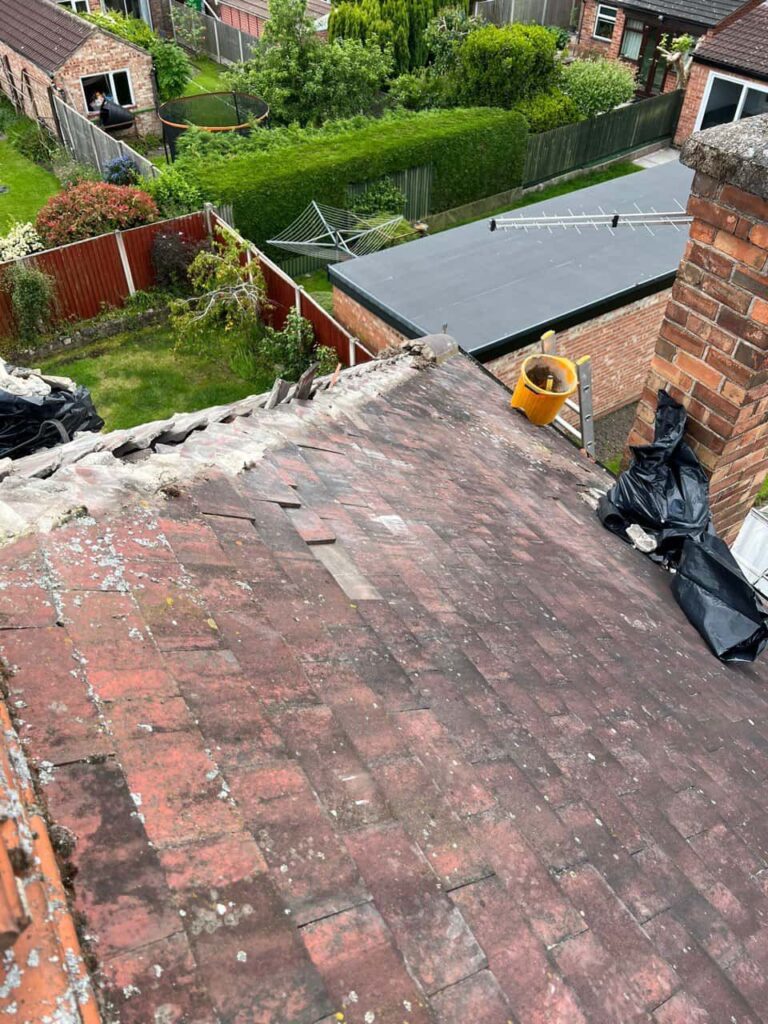
A small opening in a roof can appear insignificant, particularly when there is no obvious leak inside the property. However, even a narrow gap may allow wind-driven rain, moisture and debris to reach areas that should remain protected.
Roofing systems rely on overlapping materials and securely sealed junctions to direct water away. When a gap interrupts this protective arrangement, the resulting damage can gradually spread beyond the original defect. Early professional attention can help prevent a localised issue from affecting a larger section of the roof.
Why Small Roofing Gaps Should Not Be Ignored
Small gaps may form around tiles, flashing, ridge sections, roof penetrations and other vulnerable junctions. Their significance depends on their position, the condition of surrounding materials and how long they have been exposed.
Where Do Roofing Gaps Commonly Develop?
Openings can develop in several parts of a pitched or flat roof, including:
- Between slipped or poorly aligned tiles
- Around chimneys, vents and roof windows
- Along damaged or lifting lead flashing
- Beneath loose ridge or hip tiles
- At cracked joints and failed mortar
- Around deteriorated flat-roof edges
- Where different roof sections meet
Some gaps are easy to see from ground level, while others remain concealed beneath tiles or adjoining materials. A professional inspection is often required to identify their precise location and extent.
How Water Enters Through a Small Opening
Roof coverings are designed to shed water down the slope and into the drainage system. A gap can interrupt this route and allow rain to pass beneath the external covering.
Once inside, water may move along the underlay, battens or structural timbers before becoming visible indoors. This means the stain on a ceiling may be some distance from the actual entry point. It also explains why a small external defect can be responsible for damage across a wider internal area.
Heavy or wind-driven rain makes this problem more noticeable because water is pushed into openings that might remain dry during lighter rainfall.
Repeated Moisture Can Weaken Roofing Materials
A single small opening may not cause immediate visible damage, but repeated exposure can keep surrounding materials damp. Over time, this may contribute to:
- Deterioration of roof battens
- Damage to underlay
- Damp insulation
- Decay in timber components
- Staining on ceilings or walls
- Loose fixings and unstable tiles
- Mould or musty odours in the roof space
Materials that remain damp may also take longer to dry between periods of rainfall. The affected area can therefore become progressively more vulnerable, even though the original gap has not visibly increased.
Wind Can Make the Gap Larger
Once a tile, flashing section or roof edge begins to lift, wind can reach beneath it more easily. Repeated movement may loosen fixings, disturb adjacent materials or enlarge the opening.
This process can turn a minor alignment issue into a more extensive defect. Nearby tiles may lose support, and exposed underlay can begin to tear or deteriorate. Prompt assessment helps determine whether the problem is confined to one component or has already affected surrounding sections.
Hidden Damage May Develop Before a Leak Appears
A roof does not always leak directly into a living space as soon as an opening develops. Underlay may temporarily redirect water, while insulation or timber absorbs some of the moisture.
Although this can delay visible signs, it does not necessarily mean the roof remains unaffected. By the time a damp patch appears, water may already have reached several layers of the roofing system.
Warning signs can include discolouration, peeling decoration, damp smells, darkened timber or moisture within the loft. An unexplained change inside the property should therefore be investigated rather than monitored indefinitely.
Why Surface Sealing May Not Resolve the Problem
Applying sealant over a visible gap does not always address why it formed. A tile may have moved because its fixing has failed, flashing may have lifted due to movement, or a joint may have opened because the material beneath it has deteriorated.
A dependable repair begins with identifying the underlying fault. The affected materials can then be secured, repaired or replaced as appropriate. This approach restores the intended path of water and reduces the risk of the gap reopening.
The Value of an Early Roof Inspection
Early inspection gives a roofer the opportunity to assess the opening before additional materials become involved. The roof should be checked around the defect as well as at connected features, such as flashing, valleys, ridges and drainage points.
For properties in Hinckley, Leicestershire, timely attention is particularly worthwhile when a gap appears after strong winds or during persistent rainfall. A professional assessment can establish whether a focused repair is sufficient and identify any concealed moisture damage.
Conclusion
Small roofing gaps can become a bigger concern because they allow water and wind to reach materials that are not designed for continued exposure. What begins as a slightly displaced tile, lifted flashing edge or open joint may eventually affect the underlay, battens, insulation and internal finishes.
Acting early can keep the repair focused and help preserve the roof’s overall condition. If you have noticed a gap, damp patch or change in your roof, Hinckley Roofing Repairs can assess the cause and recommend suitable work for your property in Hinckley, Leicestershire. Contact the team to arrange a professional roof inspection.
Call us on: 01455 241 499
Click here to find out more about Hinckley Roofing Repairs
Click here to complete our contact form and see how we can help with your roofing needs.